comment 0

Book Notes: SAY POEM by Adam Robinson

Here we are in Baltimore. The party ended, improbably, for me with everyone singing “The Rainbow Connection.” Megan McShea played it on guitar. I was drunk, Joe Y was drunk and would have been dancing if it were the kind of song you could dance to. Everyone was good or pretty ok at singing.

Earlier in the party, I could see Cheryl’s teeth because she was laughing, talking to Stephanie in the corner of the room with the little plywood bar they called Tiger’s bar (short i in Tiger’s).  There was an Oriole’s game on a small television opposite them. This made Tiger’s a sports bar, according to Adam, who spent a lot of time talking to two friends I had invited that didn’t know anybody but me. This was kind of him, especially given that this was 2 parts birthday party for Adam and Mike Y and one part a going away party for me & Cheryl so there wasn’t much reason for Adam to run into these two again. Yesterday was his birthday and it doesn’t seem like he is ever bothered by strangers when sometimes I am disinterested in them. I also didn’t bring any beer because I knew a lot of other people were going to bring beer and I am a helpless cheapskate. It should be noted that I think I also provoked Stephanie’s ire in that she disapproved of the fact that I hadn’t invited any women to a reading I had organized in Richmond. This is why I like Stephanie. I guess I did blow it.


Anyway, “Say Poem” (in Say Poem) is a script to a reading with the banter, pauses, asides, and awkward gestures written in. It foregrounds itself as a made and delivered thing and this foregrounding is done in the least pretentious, most disarming way possible. It’s a party.


“Say, Thank you—

Thank you—

Then say,

I’m not reading a single line

until I know how much

this is going to get me.


Or, well, that’s not true,

but it’s meaningful. I mean:

I have certain concerns about

fiscal returns and the ones

that don’t come back.


Monday I was tired.

Tuesday I went to the airport.

Wednesday, Stephanie found

some crack in the street.

Thursday was cooool.”


It would be short changing a lot of people to say Adam makes poetry in Baltimore go, but for me he certainly made Baltimore not a place I was for a little between places but a somewhere I wished I could stay. (There’s something about Baltimore that feels like a choice. You could be in DC or Philly or NYC. It’d be easier to find an ok job. It’s not a Midwestern city, the default only game in town).


“Another poem that I’m fond of

which prioritizes sound and vowels

is DEUS ADERIT which, I think, is

Latin for “God is there.” The poem

goes:


What are my friends doing

in the American Midwest—O

yes they were born there

and make a clean living of it.


There among the great flat fields,

where they bury short

stories in thick soil, they

pluck banjo songs from the acoustic sky.

…and little deer to shoot, to skin, to

freeze the meat, unpack it for the pan. Then shovel

something in our American snowy

Midwest.


There they were plopped in states with heavily

voweled names like Ohio, Illinois,

Iowa, and there they shall endure.


So, okay. Say, Thank you.

Say, Wait, I’ve got a few more….


A lot of books of poetry apologize for what they are or obfuscate the fact that they are poetry with creative genre titles. It’s hard to find books of poems in love with poetry. It might be strange to say that this is a book of poems in love with poetry because it spends so much time making fun of the postures in which it is written and delivered. But to make fun of it and us is to love it and to ask it to be better, and for that reason this is an important book to track down from where ever it is and have on hand.


“I’ve been thinking about me nings lately

And how they ain’t like yr nings


Um. Make eye contact

with a few people in the room?”


There’s someone looking toward you hoping to be delighted. Or pee their pants laughing.

Anyway, Happy Belated Birthday Adam! All I got you was this cheap ass bunch of notes. Thanks for the book and Baltimore. Looking forward to the next.

comments 3

BOOK NOTES: FENG SUN CHEN’S BUTCHER’S TREE

Image

This book is on my press. I tend to write notes on books from my press because I often read those books.

Reading Butcher’s Tree, it seems like Feng Chen can do just about anything (I mean in poems). While it would be easy to pigeon-hole this work within veins of poetry that are working to trouble conceptions of the body, gender, and humanness and Feng’s own interest in Post-Human poetics, this  is I think to miss out on a lot. What more it is or might be I can’t describe good but maybe better through these notes.
1st Poem, “By the Dark”:
“Maybe they have
a train to catch
or the field of soft stone is a field of milk teeth

they cannot sleep as dreams snag in the esophagus
tear through twin hearted flesh
through bones made of shale.

One can see the other’s rage.
His rage is small but dense. It catches the wet light
by its webbed gravity.

Not going anywhere.
His two hearts are growing teeth.”
This poem proposes the land as bodied and the body as land. Though these equivalencies aren’t the ultimate point. The body is more—it is itself changing places with itself, the heart growing bones, the seat of the human ‘spirit,’ moved closer to that which tears, grinds and is not alive, the portals of the body. That there are also two hearts—the body itself lacking a center or cohesion.

Webbed, sticky rage: Constellations, networks, structures without centers. An image used to assert a particularly contemporary sense of being, resulting, and causing. Metaphysics? I first encountered this like most in Benjamin in the form of a constellation where what is important are the points and that which connects them is the mind perceiving relations. I don’t know Deleuze and get the rhizomatic thing second hand but it seems like these constellations planted. Roots, though, are often dry. Here they are sticky, viscous, the web which doesn’t bring forward a plant but is simply a mesh converting life to unlife and so on.

The stickiness of the web that catches things is elaborated on in a collection full of membranes, messy efflorescences, pulp, reaching its climax in the absurd, powerful “Neon Parade” where the poem paints the reader as a clown proceeding down a world saturated with rain on stilts that sink further and further into the mud with each step, each step. Here Chen moves closer to the visqueux–another concept I am probably mangling—a vision of the world as “an undifferentiated gelatinous mess.” There’s a doubleness here: both a radical assertion of a world view and a sly commentary on the act of reading?

I’ve been wondering where these slimy assertions of the world are coming from. They appear also in the torrents and hypersaturations of Blake Butler’s Scorch Atlas. Lightning through jello.  I could put forward a lot of dumb theories of my own but I’ll go with what the book itself provides in the poem “The Living” which opposes the potato like fact of a body—“My true face is that of a potato. I have many eyes, but see nothing”—that perceives in a multifaceted, decentralized way (and not through sight) to a skepticism of sight—“I am afraid too much sight can kill me” (43) and perhaps sight-based knowledge –“I drink with my eyes. When I try to explain anything, some part of something, somebody dies.” This situation, the roving, eye is basically the internet: “Eyes are like rubber tires. They take you places. / Do a lot of traveling. I try not to puncture mine, but they leak. / My great fear has always been immediacy. / Being pulled from a vapor state to the body world” (50). Make conclusions from this.

There’s great facility here, a movement between forms and syntaxes, assertions and indirections, and sympathy for how people want to see things that makes everything I’m typing wrong. Step 2: read it, then.

“The Midwest has the sort of personality / that makes me worship cold blank plains / like the face of someone I want love from, basic needs / tied up in a cloth sack, everything in it hard and dry / and clean.”

comment 0

DC I MISS YOU REAL BAD: Mancus, Karl, Wong & Davis This Sun at In Your Ear

In Santa Fe right now. But if I could be here I would.

Facebook Stuff.

I N Y O U R E A R

@ District of Columbia Arts Center
3:00PM, May 20, 2012

JORDAN DAVIS,
STEVEN KARL,
ANGELA VERONICA WONG
&
TONY MANCUS

Please join the In Your Ear Reading Series for a reading by Jordan
Davis, Steven Karl, Angela Veronica Wong, and Tony Mancus at 3PM on
Sunday, May 20, 2012.

JORDAN DAVIS is Poetry Editor of The Nation. His poems and prose have appeared in Poetry, Boston Review, Chicago Review, and American Poetry Review. His books include A Little Gold Book, Million Poems Journal, From Orange to Pink, and POD | Poems on Demand. He divides his time between New York and southeastern Ohio.

STEVEN KARL is the author of the chapbooks, State(s) of Flux, a
collaboration with Joseph Lappie (Peptic Robot Press, 2009)
(Ir)Rational Animals (Flying Guillotine Press, 2010) emissions/ of
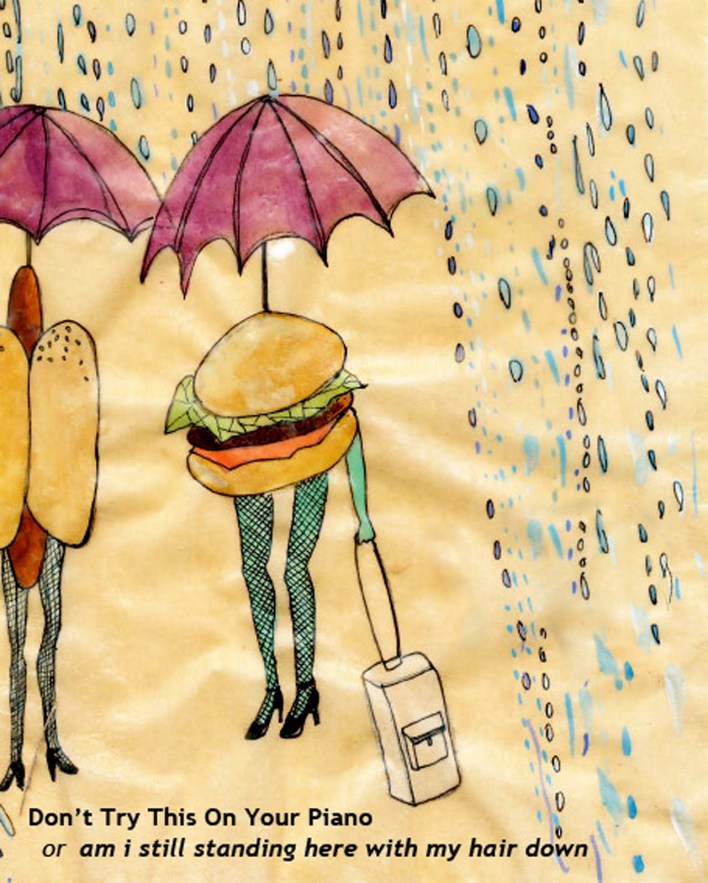
(H_NGM_N, 2011) and with Angela Veronica Wong, Don’t Try This On Your Piano or am i standing here with my hair down (Lame House Press, 2012). His poems have recently appeared in or are forthcoming from Forklift, Ohio, We Are So Happy To Know Something, and Everyday Genius. That’s a Unique Online Journal. He is the poetry editor of Sink Review and a news editor for Coldfront Magazine. He lives in New York.

ANGELA VERONICA WONG is the author of a full-length collection of
poems entitled how to survive a hotel fire (Coconut Books 2012) as
well as several chapbooks of poems. She lives in Manhattan and on the
internet at www.angelaveronicawong.com.

TONY MANCUS is co-founder of Flying Guillotine Press. He has two
chapbooks coming out this year – Bye Land with Greying Ghost and Bye
Sea with Ghost Ocean. He works as a test writer and a writing
instructor and lives in Rosslyn with his wife Shannon and their two
cats.

Admission is $5.00.

District of Columbia Arts Center is located at 2438 18th Street NW in
Adams Morgan, Washington, DC, between the Dupont Circle and Woodley Park metro stations. For directions, see the DCAC web site at
http://www.dcartscenter.org/plan_location.htm


The photo above is from Steven and Angela’s new chap, which is sitting facedown open style on my shelf getting read as a good break between things:]

And acknowledging distance between your body and the earth seems like a bad idea. And the balancing is the part I could never master, the looking forward, the soft placement of feet, one in front of the other. And to advance, no matter how slow the advancing.

y

No matter how slow the advancing it remains upon us.

An army of ant legs so prodigious it appears as art.

Your face in mind. Eyes’ blinked I believe out of belation.

There’s a guitar in the kitchen. Then you were weren’t.