DEAD HOUSE
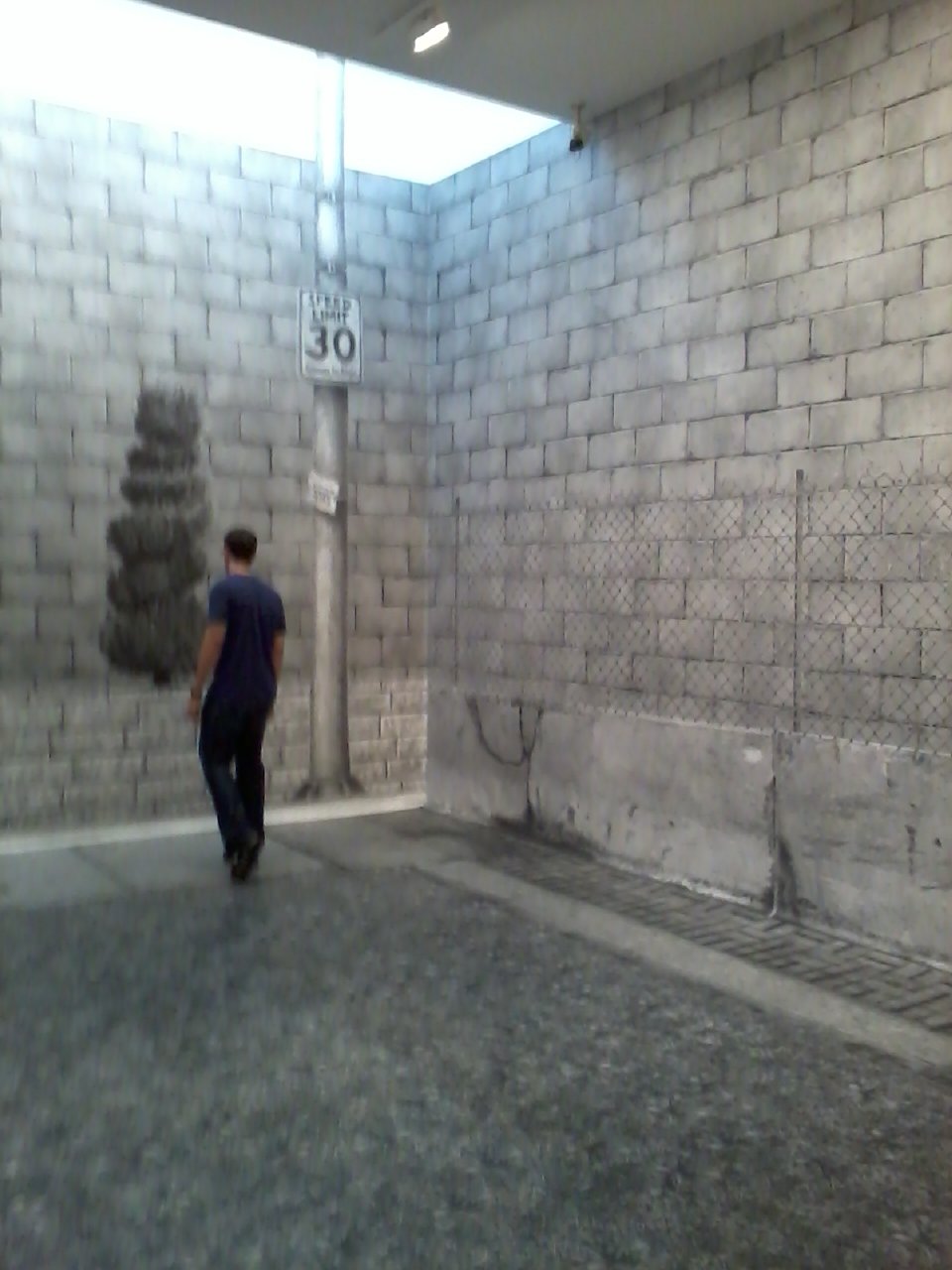
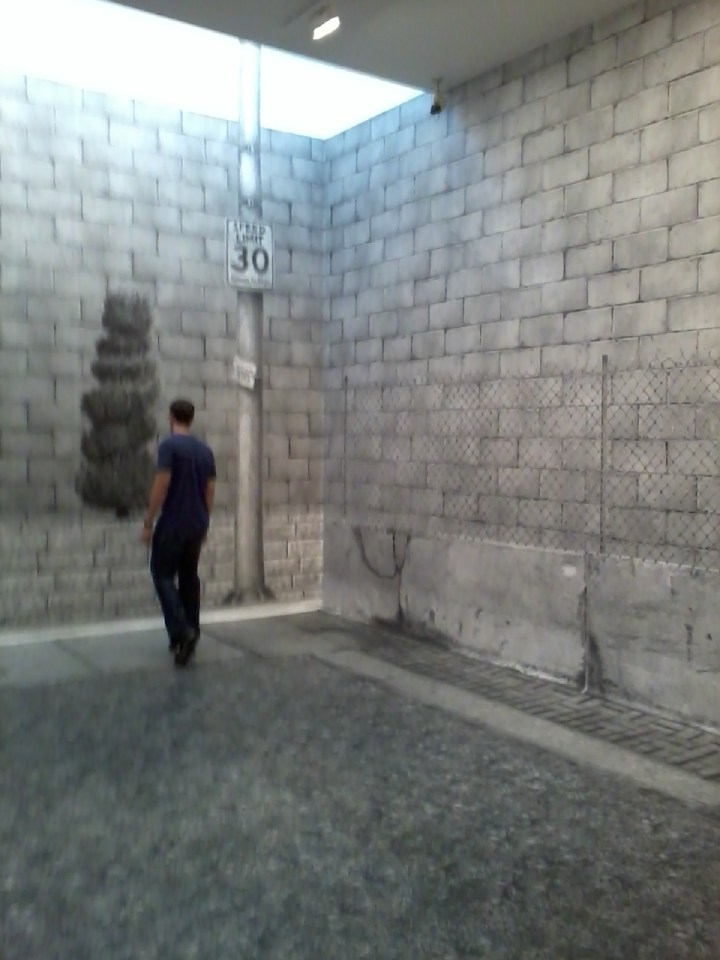
Gary Kachadourian’s installation at the BMA is a room wheatpasted with xeorographic prints. The gallery space is transformed into a dismal, flattened set of a Baltimore-a city block, a wood paneled interior, and a bathroom. On account of it being to scale, a sort of human sized diorama, a kid like engagement flared up in me when I stepped into the space, started moving through it.
Looking closely at the sidewalk, the paneling of the house, and even the grass reveals that each whole object–a wall, ceiling, etc– is made up of several reproduced smaller images.. That’s how we build things–out of rectilinear, reproducible, mass manufactured blocks. It becomes more disconcerting, I suppose, when applied to representations of the natural–a square of grass with the same off centered weed in it. The city-scape as mass-produced, biologically meager, etc.
Perhaps more interesting in the flattening of wood grain walls and grass is that I had the impression I was moving through a 1990s 3-D corridor video game environment where there is no texture and no possibility of engaging with the particulars of the environment, just movement through various iterations of a maze.
Kachadourian’s flattened city scape points out the alienating nature of bleaker city-scapes but isn’t that something any Baltimorian who has taken a hard look at some of the cities less pretty blocks should understand fully already?
Isn’t, at this point, pointing out alienation banal ? Maybe it is. Or its the first step in some sort of dialectic. A stuttering step that art for the last century seems intent on repeating.
LIVE HOUSE
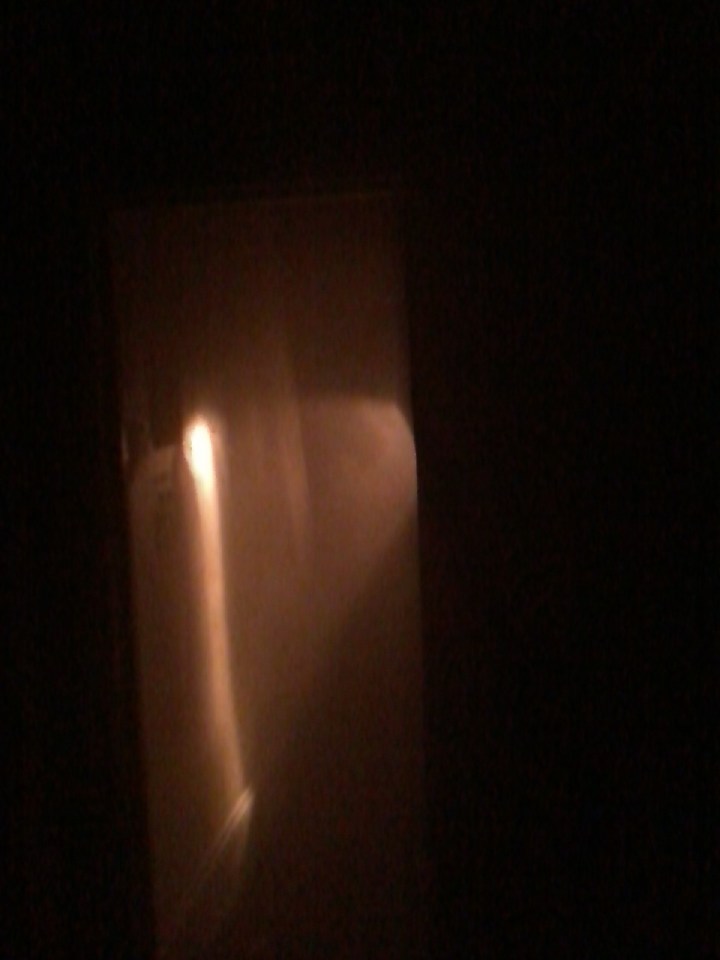
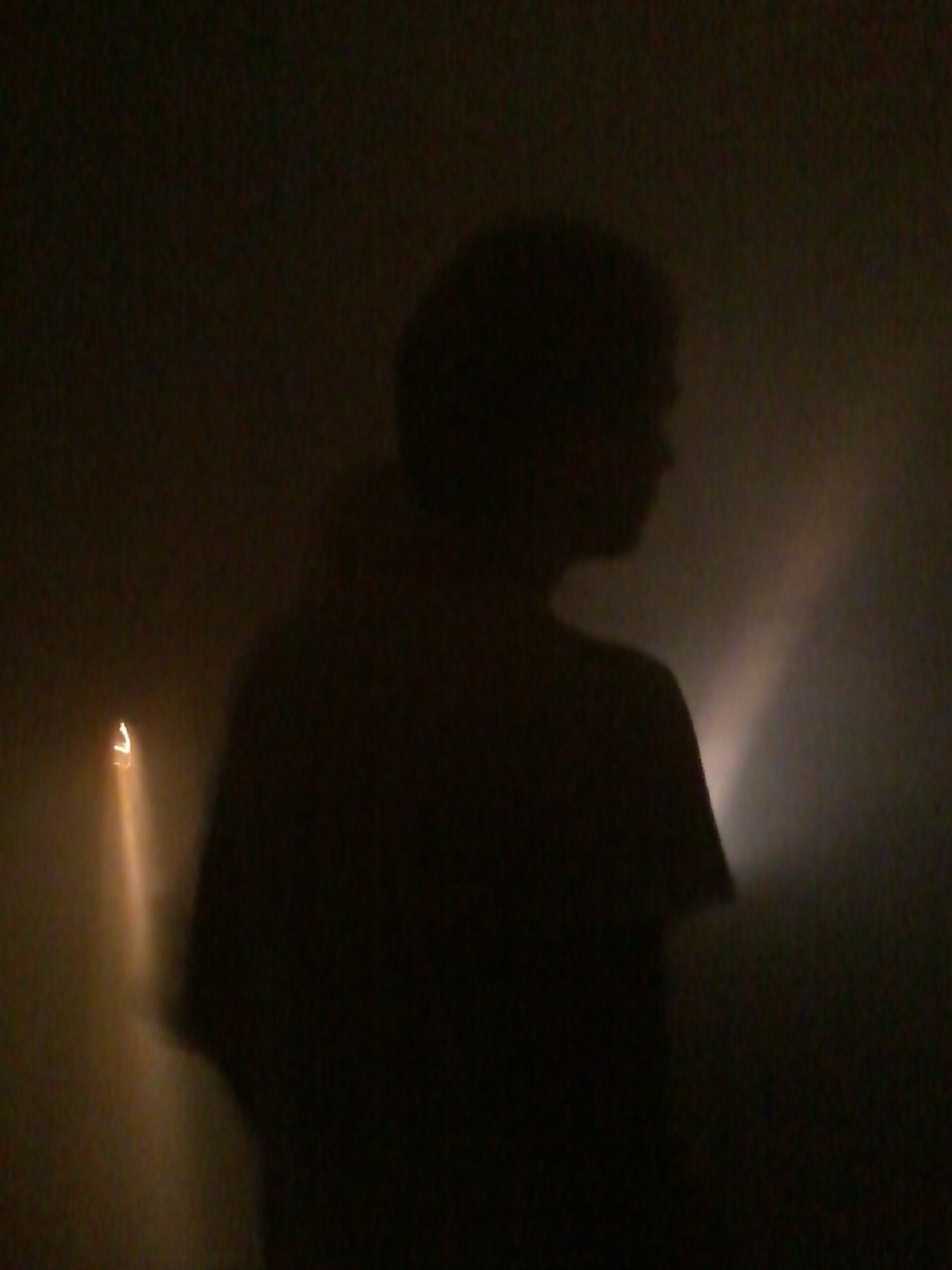
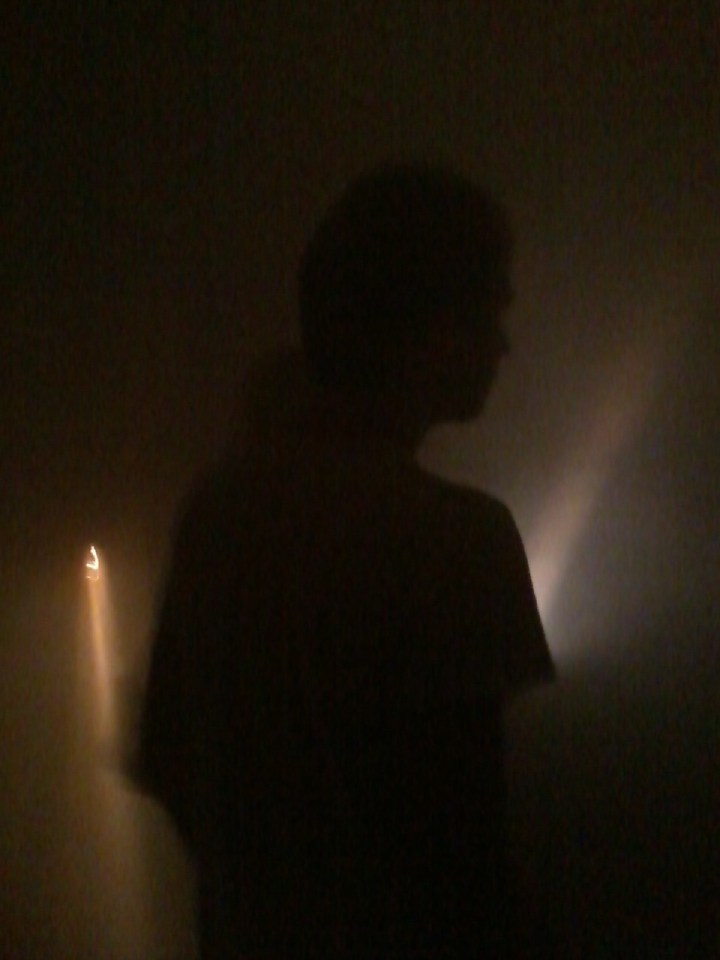
On September 10th with some friends visiting from out of town, I stepped into the art space / collective living thingy at 1337 H St NE (Wash, DC). We were handed flashlights and told to use them to explore two stories of fog filled rooms. Ambient, sometimes discordant music from Bluebrain started playing from various rooms and as we passed through each room the texture of the music changed as well, determined by changes in it over time but also our proximity or distance from speakers each playing different things in different rooms. The experience was dynamic. People were reduced to shapes and gestures, the fog making their movement through the space tentative, delicate, their silhouettes becoming part of the ‘art.’ It was until seven or eight minutes in that our group realized that we could turn our flashlights. We turned them off and stood in the darkest room, shaking, with the floor, from the musics’ reverberation, and generally melting into the space.
Gins and Arakawa state that every piece of architecture should pose a question to those who encounter it. This one certainly seemed to accomplish that minute by minute as we kept deciding what do with the space as it and we changed. I’m hoping there was some documentation of the house (other than these shitty pictures). I’ll also look forward to what the H st folks do next. And thanks for getting us in, Adrian!