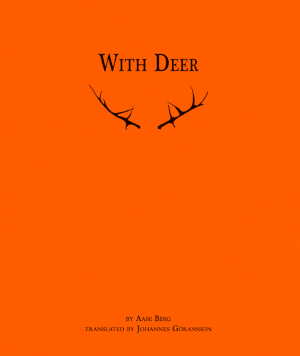
It's Like Halloween All The Time In Here
The excellent thing about this book is that it’s gothic, overwrought, and ridiculous (decadent? Baroque?) cover to cover. These prose poems don’t live in a hum-drum world that’s sometimes, melodramatically, punctured by the weird and/or horrible. They completely occupy an inverted world where things without shape or skin are devouring each other all the time.
What seems initially absurd–
“The gorge is swarming with guinea pigs.”
–doesn’t relent and taps into weirdly fundamental anxieties about the body and agency:
“…She gives birth and groans, she moans and bleeds. Everywhere the membranes, everywhere their bloated puff bellies. We run with the heart in the tunnel, you and I, while nervous systems break down behind us, while the amniotic fluid surges in the pumping, pulsing chasm…”
Where some prose poems have fun transforming one thing into another–here’s a turtle–Poof–it’s a hat!–these seem to confront us with the liminal. Parts are named, but there is rarely a whole which the eye can rest on. It’s figures seem mutated, change is painful, uncontrollable–
“…His hands sank into her as if into clay, which amorphously and muddily enclosed in his soft stumps. The girl could no longer be distinguished from the whining animal. The creature got up on its legs and wobbled across the slippery floor. Again a kind of moan rose toward the brown skies…”
This plugged directly into my animal brain.
Interviews with the translator Johannes Goransson point to horror flicks as part of Berg’s inspiration and that seems, well, entirely probably. When I was thinking about English language poetic analogs not much else came to mind. Cinema where nature is thoroughly poisoned seemed closer in spirit–scenes in Shohei Imamura’s Black Rain where victims of radiation poisoning are wandering the bombed out city and peeling off their own skin or “The Weeping Demon” vignette in Kurosawa’s Dreams.
As for the translation–and I know nothing about Swedish–Goransson keeps the diction simple and seems to retain the prevalance rougher consonants intact when he can. Occasional archaic diction (“nigh”) and invented compound words (“face-mouth”, “acheworks”) might seem utterly distracting anywhere else but here they’re used consistently to compound the strangeness of the landscape. Goransson manages to walk a fine line, making the language strange and guttural without it stopping readers in their tracks or completely ejecting them from the piece.
And what might be the smartest thing about With Deer is that it takes these critical breaks from the meat and bones fest to also be G-D beautiful. Or to embody a different kind of beauty. You can judge for yourself. From “Iron Healed”:
…Slowly I lick clean my languid glass hand
No more dead whimpers, no more will my sorrow-name
be called out of throat-hole, a marsh, wells
If iron is broken down into earth and peace
If iron is broken down into earth and peace
If iron can still be healed
We’ll put this one on the shelf between Dan Beachy-Quick’s “North True South Bright” and Ted Berrigan’s “The Sonnets.” Still tackling post AWP stack of books. And I’ve been more than happy and kind of humbled to find myself in such good company at Black Ocean.
–Joe
 JOE HALL