comment 0

October reading germinal

October

B>O<O>K<S####RE/Ad+_+_+++___++___&(*&)>>>>>>>>>>>>>>>>>>>>>>>>>>>>>>>>>>>>

Amy De’ath & Fred Wah’ Toward. Some. Air. (Banff Center Press 2015) This one patched some major gapers in my brain. It feels like a major post-conceptualism resource for writers not interested in po-establishment award-ready verse (infrastructure of which is collapsing anyway) or poetics. Rather, this offers statements of poetics, interviews, and close readings from a trans-Atlantic range of writers working in English. Then apply whatever vexed descriptor – experimental, avant garde, or maybe just non-normative—outside the mainstream of lyric narrative verse. Sean Bonney, Dionne brand, Amy D talking w/ Spahr, Moten, etc. Difficult to offer synoptic thought here given the heterogeneity so we’ll veer toward pointillism. Important for me, is the thread of explicitly Marxist, class-based and sometimes revolutionary poetics given voice mostly by English authors (which helps reveal that the 45+ generation of U.S. poets still fairly allergic to embracing this lens or even variations like racial-capitalism etc) like Sean Bonney, Amy De’Ath, . &&&&&&&& Jeff Derksen on militant affect: “Militancy today is not only political; it is also affective. Sincerity, wether tied to counterinsurgent movements or militant poetics, is a social affect rather than an expressive fallacy or practiced authenticity.” Yes,often, see the poetry that comes out of militant movements, even in its humor. & the relation of sincerity to “accuracy of detail.” Appreciated this extension of Zukofsky: “according to Zukofsky the actual poetics of sincerity move from an aesthetic aspect of the poem…out into the social via an ‘accuracy of detail’” (32). The particular moves the poem into the realm of social experience. See Nowak on that, too, and the relations of poetics production. Canadian poets also demonstrating their longer involvement with decolonial poetics—see conversation between Rita Wong & Kateria Akiwenzie-Damm (Wong: “words are not enough; words need to be related to actions, relationships, life. KAD: “My experience in that [settler] society tells me that silence is often misinterpreted as agreement, acquiesence, a lack of understanding or intellectuall capacity, acceptance. Often, it’s not! ^^^^^^^Kaia Sand starts metal: “Today I write with a sledgehammer” making material the gaze of the surveillance state & I wouldn’t be surprised if she emerges like Oppen, after years of activist work, with poems like sledgehammers ///////////// Liz Howard from North Nord Giiwedin: “a screen test in the abattoir / of the encounter my lineage / a quack chandelier of forest bones and trash / for lack of any other occupation // within childhood” … & “toward the city gichi-oodena / where the air irradiated / my peach pit doggerel art” fuck yeah.%%%%%%%%%% Chris Cheek, from “at the end of the line” : Poetry releases production of meaning in the cut at the end of the line—whilst each / cut documents constraint / performaing a damaged / community healing, it can only / fail to govern meaning. True beauty.” & “and sick. Poetry services critical mirrors to power / offering empunked tools for we who suffer the physical abrasions and psycho-geopolitical traumas.” While I distrust statements of the politics of aesthetics outside of a keener sense of context, I really like the sense of play and generativity in Cheek’s statements. And, at the end of the day, I’m an inveterate enjamber of content. ^<^<^<^<^<^<^<^<^<^<^<^<^< & Fred Moten on the other side of play in the poem “sweet nancy wilson saved frank ramsay,’ “Speaking of noice, what about the damage that // comes from desire manifest as repeated play? Over and / over again indexes unfulfillment in indulgence. Sometimes // I listen just for the trace of that obsession now that digital / technique keeps faith with the cracks and pops of love.” & that desire iterates: “said in singing // though it can’t be said, said in leaving / singing, said leaving // it unsung, song of desire, safe from desire, saved in desire, // I been saving my love for a long time.” //////////////Keston Sutherland gets us back to Marx & the relation of poetics to exhaustion, emptiness, devastation. Let’s go: “Life is comprehensively wasted under capital; it is not just underperforming. Its creative potentialities are not worked out but exhausted when they are realized in actual production: the emptying-out of human powers is complete in every act of production by subjects who are made to survive on condition that their intellectual and bodily powers be perpetually wasted on the perpetual intensification of their social disempowerment. Life is wasted under capital not merely by being refused or neglected, or because people avoid whatever comportment philosophers or poets tell them is required for life to be authentic, but in great structural bloodbaths of murderous complete emptying perpetrated in sinkholes of spiritual devastation known as workplaces in labour markets.” Extend this into the framework of U.S. empire. See the not just material and energetic waste but ‘spiritual devastation.’ Sutherland sees his poetics as defined by this loss: “My poetry has always been obscurely determined by what I think and how I feel about comprehensively wasting my life” (146 – why have I started using page numbers now?). Poetry steps in as a means to recuperate this loss: “Poetry strains to express life and cancel loss.” This recuperation is not melancholy; it is defined by exuberance: “the strain is instinctive, emotional, cognitive, sexual, and sometimes orgasmic, often, radiantly, all at once.” & “Poetry is the opposite of the unrestricted waste of humanity: it is actualized subjective infinity. Poetry is the opposite of emptying: it fills language.” As with Baraka’s early idea of a poem as composed of junk just picked up on the street (or Vicuña’s precarios), the poem isn’t inventing language, it is reanimating that language which has been wasted, exhausted: “the best poetry is also invariably the best at using exhausted language” (147 now). That’s the magic trick & what makes poetry a radically democratic art form. It shows us how to draw on that great common we all share: exhausted ass language. <<<<<<<<<<<<<<<<< & & & & & & & & Here’s a quote I just like by Nicole Brussard, thinking about the relationship between city soundscape and poetics: “It’s funny, in the early twentieth century people were all buying pianos and they were buying pianos not because they liked music, but because they wanted to make sure that their piano would make more noise than the piano of the neighbour. So, now we live also in a kind of crazy society where we keep making a lot of noise to cover the noise of our neighbour, and the poet is making a sort of beautiful silence and that’s a chance to start all over with that silence” (169). In my MFA days a star system poet told us that poems were architectures of silence. That stuck. Broussard textures this: implicitily posing first an aesthetic question: how to make that silence beautiful. Then, a more potent question that bleeds across the boundaries of the personal and political: how to start all over with silence? &&&&&&&&&& Cathy Wagner keeps it real &&&&&&&&& Rachel Zolf provides a pithy definition of “mad affects” in response to reading: “which could mean the reader gets mad at me while trying to decipher sometimes indecipherable language and/or gets mad at the world and/or goes a little mad” (209). //\\//\\//\\/\\//\\//\\//\\//\\//\\//\\//\\ Speaking of filing away terms, Drucker (via Darren Wersheler) hits upon something when she notes the tendency of poets to fall back on a description and justification of their aesthetic strategy as one of defamiliarization (“make it strange,” Zapruder says in a craft book) and responds with “refamiliarization”: “Refamiliarization returns images and symbolic / expressions to a system of cultural and symbolic / production with which they are codependent.” Okay, that’s the aesthetic move. Here’s the effect: “It shows us what we have forgotten / about the dynamic processes by which value and / meaning are made….it is fundamentally an act of recovery and connection, not innovation, novelty, or shock exposure.” And I find myself thinking about whether this describes something I’ve been calling socialist surrealism or social surrealism, a kind of surrealism whose arc is in the other direction, that begins with the strange that is transformed into, located back in the social world and that gesture is repeated until it describes sectors of material and affective reality—being in work, the streets, transit infrastructure. But here the idea of progression or direction may be off. I’m interested in a kind of simulateneity, of laying a transparency over one reality so its there and not there, the present and the future simultaneously. But let’s get back to what seems so necessary about Drucker’s method. It “returns” images and symbols “to a system of cultural and symbolic / production with which they are codependent.” For me, the idea of codependency is crucial, that in systems of production, its nodes are not extractable because it is through production in the system that those nodes are defined just as they contribute to the system that provides definition. I’m thinking here also of how Yepez observes the habit of many modernist was a sort of relentless imperial decontextualization of signs and symbols into a new, encompassing, subjective ego-riveted whole. Anyway, it’s suggestive. %%%%%%%%%%%% Daphne Marlatt thinks about form and then syntax in its capacity to express the dense interconnections of eco-social ecologies: “The question for me is how, without abandoning syntax altogether, can the lateral drift of linguistic connectiveness alter sentence-ing to register the ways we are implicated, on so many levels, in the fragile overlapping eco-social webs of our world” (269). Marlatt also provides what to me reads like their own, suggestive, version of Levertov’s organic form in describing the act of writing: “Writing, not just the fingers on the keyboard or the pencil (yes, their rhythms and movements too), seems to be a listening: listening in the echo-chamber language operates in charged thinking. Hearing other altering, alt/erring, even errant, possibilities of connection on both phonemic and semantic levels, on memory levels (resonating phrases from others’ work through time), all points of contact in a web of thought that shifts, folds over on itself, opens fruther connections” (269). $$$$$$$$$$$$$$$$$$$$$$$$$$$$$> The interview with Sean Bonney & Stephen Collis is molten. SB: “I see myself working more-or-less in that tradition, but the way to deal with the work of your forebears is to critique it, not lick is arse.” Bracing statement that got me thinking of the many forebears I disavow instead of claim and critique. So let’s break the habit. It’s friggin’ true I was influenced by Pound and the network in which he was such a major node in my mid-20s. How could I not be? I was being forced to shotgun him by a mentor but the relation was always critical, though not as much as it should be and it would take until The Empire of Neomemory to find a more satisfactory critique not just of Pound the person but the Poundian modernist epic aesthetic. Anyway, SB on subjectivity in capital’s era of decimation by war, famine, and abandonment of populations it has framed as surplus: “What does a critique of subjectivity have to say about the subjectivity of surplus populations, for example? The subjectivity of an economic migrant, or that of a refugee, is already subject to absolute critique—annihilation–by capital. For me—if my poetry ignored that, it would have no claim on modernity at all, because the centre of any accurate definition of the world is not Wall Street; it’s all the shanty towns across the globe. I’m interested in poets, or in trying to make a poetry, that recognizes these processes. I’m interested in a poetry that wants to step outside of the poetry room. I have a lot of fun these days doing readings where the audience isn’t just a bunch of other poets. I like reading at the occupations….Because if you’re writing a political poetry, you want it to be heard by other political activists just as much as you want it to be heard by other poets.” That doubleness seems crucial at the end of this defense for a collective subject and a poetics that addresses the creation of vulnerability and voicelessness. Is it because poetry ‘communities’ still have the power to designate who is and who is not a poet now that most political and labor organizations have largely abandoned the cultural field? Or because of the pleasure of being in community with fellow makers? Well, Bonney provides his answer. And the effect of such poetry? “It’s not a question of whether poetry by itself can change anything, obviously it can’t, but rather what it is that poetry specifically can contribute to already-existing radical projects and theoretical advances.” Note the final and. And consider the social relations the poet has got to maintain to do this work, the work and orgs they’re aligned w/. Collis provides the other half of this discussion of individual v collective (or collectivized) subjectivities: “I am stumped by some poets maintaining (the old Adornian idea) that we can ‘resist by form alone’.” Yup. And: “Form continues to be important to me…but now perhaps more than ever I am interested in the dialectic of form and content.” Yup. And let’s keep going: the dialectic between form, content, and the social relations of the poet, particularly as they condition who receives the poem. Collis turns to the Zapatista’s call for a “renewed commons and a common condition and subjectivity…slicing through decades of poststructuralist unease.” We might here this call echoed in certain calls for solidarity from the Palestine liberation movement. Collis follows this w/a generalization that many would object to but which I think sticks: “priviledged people assume the invisibility and obviousness of their subjectivity, but they largely talk a language of liberal individuality.” The interview ends with Sean Bonney: “Occupy the Future” (293). **************************> Amy D’eath interviews Juliana Spahr > I lv JS but think she gets it wrong here: “Despite my hesitations around a lot of the things that get said about poetry and politics, there’s another way in which I don’t want to dismiss the way that literature and all art forms have often been seen as a crucial part of decolonization movements by the people who are involved in them. So wanting to be a movement poet is sort of said as a joke. As in there is so clearly not a movement aymore that one can be a movement poet for” (302). This weary attitude of being stranded by history is a common stance of a certain generation of poet and, well, it’s important to reject for a couple of reasons. It risks giving the impression that movements come ready made and legible, waiting for culture workers to be plugged in, rather than movements being the ongoing expression of the dialectical push and pull of its members. There’s impefect but potentially radical, on-the-ground work happening rights now and culture workers can get involved or they can admit that what prevents them from doing so is their own intense idealism. I also think that, yes, if writers get involved in organizing and movement work that work will remain illegible to the larger literary commuity in our current discourse environment which is singularly uninterested in understanding the work of poets in light of their practice or forms of circulation that aren’t relatively conventional. That illegibility might be double or triple for the kinds of work JS is most concerned with, decolonial, marxist-feminist, but it doesn’t negate the fact of the work. But it may be that JS’s view comes from this fantastic insight: “There is, for instance, a lot of really good work that is being written that suggests intimate publics and transnational subjectivities, that is anti-national; and yet this work somehow, to just take one instance, is not in any way a part of the huge anti-globalization movement that defines the turn of the century” (304). Yup. Virtual identifications. No notes here, just vigorous agreement and please somebody ask me to write this essay: “The other thing that seems very crucial to me is the problematic relation between Marxism and evironmentalism: that you can have an ecopoetics that thinks it doesn’t have to be Marxist, or thinks it can allude briefly to capitalism, as if the questions aroudn ecopolitics or ecopoetics are merely representational and not about capitalism” (306).

Ok. Let’s take a (paragraph) break.

I read a ragged mess of other stuff, pulled from a decade-long growing textual blob with a few hundred undread covers that’s haunting me. I want to read it all, bad. More, I want to have read it so I can talk about it with the people who gave me the books about what they gave me. Moving by intuition, mostly. second factory (Ugly Duckling Presse Spring, 2021). Enjoyed poems by Brendan Lorber, Kelly Clare, more. /////////|||||| MC Hyland’s Plane Fly at Night (above/ground press, 2018): “When the delta tries to pull at the dark threads / Are you a green penny are you annotation” – from “Paper Experiments.” ||||||||||||||||||\\\\\\\\\ Anthony Paul Farley, “Critical Race Theory and Marxism: Temporal Power” (Columbia Journal of Race and Law, 2012). The methodology here is outside of my historicist preferences; this is high, idealist theory. That said, there are some bangers that resonate with Ali Kadri’s recent theorizations of structural genocide, the essential role of genocide to the functioning of western capital: “There is no such thing as race unless there is first an act of mass murder that attaches the mark of race to capital. That is the sin of capital; capital requires mass murder and it makes race out that mass murder”; “Memory is the first step to making this earth whole”; “We do not and cannot know the infinite structures of feeling that were destroyed by the original accumulation”; here, we see the horrible mechanisms of the destruction of history, of epistemicide and the impossibility of any settler-colonial system of law to accommodate justice for settler-colonial genocides : “Official memory, legal memory, as a mater of method, can have nothing to say about the original accumulation. Law is law to the extent, and only to the extent, that it occults memory of the original accumulation.” /////////////////////|||||||||||| Supplication: Selected Poems of John Wieners (Wave Books, 2015). V sad I don’t have time to write more here about this but hope to later. Wieners neglected supernova Behind the State Capital (in David Grundy’s terms, a working-class, genderfuck text in which Wieners at points critically negotiates his psychiatric incarceration) gets the reproduction it has long deserved but with a baffling lack of context provided by the editors. Wieners is an important poet for me; I heard Brenda Hillman say she was a fan of his in 2002 and found his Black Sparrow collected after. Think I read it in 2004 and it rocked my shit as I was working at an industrial printing press at the time and pretty lost and here was a man describing working class experiences, sweeping a theater (I think?) in a sometimes femme voice. That showed me something. Long live John Wieners. ||//////////////////////// Postcard poem from Buck Downs “[the mirroir].” |||||||||||||||||||||| Peace Eye by Ed Sanders (Frontier Press, Cleveland OH, 1965). This friggin guy. What a mess! Part of investigations into censorship, criminalization, & profane poetics in the 60s. |||||||||||||||||||| Betweenthehighways d.a. levy republication bibliography (printed on receipt tape n.d. already fading). ////////////// Marlon PV’s chapbook no queiro ser la nube de internet (printed w/risograph 2025, no. 5 of 50). from “Personaje secundario” “Has sido elegido entre millones / de otros idiotas / y como en todas las historias / de antihéroes malditos” //////////// The Palestinian Freedom Now Suite by Paul Catafago (The Bodily Press, Amherst, MA, 2025). Poems. Thx to Karl Carter for sending this to me, sustaining forms of solidarity across decades. ||||||||||||||||||||||||||||||||||||||||||||||||||||||||||||||||||||||||||||||||||| Little Bird by Darcy Van Poelgeest and a bunch of other people (Image Comics, 2024). Eisner Winner graphic novel. Gorgeous, strange, and visceral in the mos literal way. Glad this exists, have trouble with this relentless scale of violence r.n. Thank you. Good bye.

comment 0

Read: September, 2025

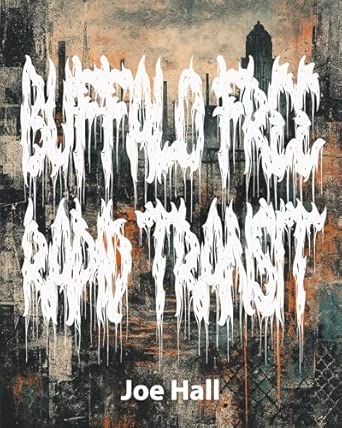
BOOKS+~~~///READ+++++++++++++++ + + + + + + + + + + + + + + + + + + + ++++++++++++++++++++++++++++++++++++++ + + + + + + +Diary of My Corpse at Various Stages by Robin Lee Jordan (Self-published chapbook) Powerhouse of the Buffalo poetry scene, someone making community with a collectivist attitude, Jordan’s work should be better known. This is exhibit one—mix of poems and high-resolution full-color reproductions of collages printed mindful of page and spread composition, letterpressed mixed-media cover, sown binding—the chapbook itself a heady combination of venerable techniques and new print capacities. Even as they exclude biographical detail, the poems themselves feel vulnerable and strange and menacing: “I’ll report my own failings. / You’ll swim into the whole boring // story—full of children with / pale blue blood chirruping / for attention. Step into / my accidental deep end, / you giggling cunts. / You are not mind, thank god, // and this place keeps happening.”~~~~~w/Lost and found and then and now and other collective artmaking rituals & sometimes we drink tea and write together and honestly just hang out – published by Robin Jordan, this chap documents the process and outcomes of a series of collaborative writing events Jordan hosted. Appreciating the work, of course, but also how the chap documents through notes and photographs its process. So it’s foregrounding the relations of production that went into these poems and the dates, times, and people involved. I’d like more of this kind of documentation of the social grounds on which art is made. Anyway, hooray for Robin Lee Jordan. Her work may not be loved in the pages of literary magazines, but it is loved by people. Which is better. + + + + + + + + // ? ? ? / / / / + + + + + + + (( ( ( ( ( ( ( ( ) ) ) ) ) ) ) ) + + + + + + + + + + + + + + + + + + Monsieur Pain by Roberto Bolaño (New Directions, 2010). A WW-I gassed mesmerist losing his grip trying to solve the case of a poet with a fatal case of the hiccups in a Paris about to fall under the sway of a fascist collaborationist regime. A novella – the first longer Bolaño work I’ve read. It’s absurd, melancholy, and inimitably strange. Where else would you get a pair of twins whose passion is building aquarium-bottom miniature train disasters who earnestly believe what they are doing will become a cultural phenomenon? What I mean, is that this Bolaño narrative, too, includes deranged poets. + + + + + + + + + + + + + + + + + + + + + + + + + +++++++++++++++++++++++++ + + + + + + + + + + + “Catch and Release” by Amy X. Wang (Joyland, April 29, 2024) Well, this vicious little story pops a wheelie on the Epstein-y zeitgeist with its deprofessionalizing academics setting up interactive theaters of lust and cruelty for a titanically wealthy and perverse ruling class. The pacing is brisk and the writing terse and colorful, delivering up grim twists. Still trying to figure out whether or not it’s trading a little too heavily in shock but, damn the way it dialectically stages individual psychopathy, power, and the way capitalism structures relationships is pretty spectacular. And sticky. C recommended this story because she’s still thinking about it, and so am I. + + + + + + + + + + + + + + + + + + + + + + + + + + + + + + + + + + + + + + + + + + + <<<>>>>>><<<. “Cleveland::The Rectal Eye Visions” by d.a. levy (reprinted on receipt tape by betweenthehighway press n.d.) “& the parades of parades of death / whisper in the marching marching / of the 4th Reich America / UBER ALLES” “HEADLINE: NIAGARA FALLS BEATNIK POETS TRY TO BRING LOST LOVE TO HONEYMOONERS . POLICE ARE ROUNDING THEM UP & X-RAYING THEM TO DEATH” “& it is killing you faster than shooting / methedrine crystals on the beaches of lake erie.” Sometimes I forget how funny levy could be. Like teaching a class on telepathy and never showing up to teach. Thx, Alex. = + = -= + = -= + = -= + = -= + = -= + = -= + = -= + = -= + = -= + = -= + = -= + = -= + = -= + = -= + = – stanzas for four hands: an ophanim by dominick knowles & mathilda cullen (woe eroa 2021) Fierce, funny, staggering—the bleeding edge of militant poetry: “it will be a pleasure to watch them, / still begging for prize money, / fry to char in solar wind.”

comment 0

Read: Aug 2025

BOOKS+READ+++++++++++++++

+ + + + + + + + + + + + + + + + + + + + + ++++++++++++++++++++++++++++++++++++++ + + + + + + + The Best American Science Fiction and Fantasy 2024 Ed. By Hugh Howey (Mariner Books). ~~~~ I’ve gotten in the habit of reading these once a year to get a sense of the state of mainstream science fiction and fantasy. And to trawl for stories to teach. That said, I’m open to alternative suggestions for yearly anthologies. For a long time I’ve struggled with this quote from Samuel Delany on the immanence of fascism in science-fiction: “most science fiction—indeed, much of the most narratively energetic science fiction—is governed by a political/ethical system one hesitates to call fascist only because any functioning fascist group would have to be a great deal more in touch with the complexities of the world even to exist, much less to oppress. Therefore, science fiction’s value must be present elsewhere than in the ideological systems reducible from it.” This was in 1979. And it sends me back to try to look for what value is salvageable from this year’s anthology. A little context: after a run of decent yearly anthologies, this one is under the editorship of Hugh Howey, an Amazon author, and it features what looks like an increasing number of stories that first appeared on Amazon platforms. Jeff Bezos, who is invested in science fiction as a genre of writing, and is actively creating technological narratives for our future that all kind of suck. Does this signal the Amazonification of the genre? I hope not. I hope it’s a blip. Because so many of the stories validate Delany’s analysis and reflect the wider U.S. turn against empathy or, you know, basic moral feelings about the value of human life. “Window Boy,” from its firmly middle-class suburban house as technologized para-apocalypse fortress, tells us to fear the stranger outside our door seeking help and maybe to beef up our own defenses in preparing for class war. (The house itself is a fascinating character and the story makes an intriguing companion to Ray Bradbury’s “There Will Be Soft Rains”). “Emotional Resonance” is a bittersweet post-human love story with a few fascinating highlights while also featuring its characters (huge mechs) casually committing genocide without really reckoning with it—a shoot and cry narrative at a cosmic scale that reflects a lot of U.S. narrative production which wildly abstracts violence from its consequences. “If Someone You Love Has Become a Vurdalak” concludes this thread of narratives of disposability with one twin killing the other who is coded as a monstrous addict. That said, it’s not all bad. “The Blade and the Bloodwright” dramatizes the construction and destruction of body politics with all the horror, gore, and fascination it deserves. Didn’t realize body-politic fantasy and horror was its own genre. “John Hollowback and the Witch” and “Bruised-Eye Dusk” are both charming, immersive, and close-to-the-ground fantasies, both of which recuperate the figure of the witch. “Disassembling Light” is a beautifully written account of a master craftsperson testing an apprentice. And through our shifting sympathies with the first-person narrator, invites readers to question what they had identified with in someone who does something quite wrong. I find that scrambling of identification quite productive. Anyway, I wish I had written more about the second part of Delany’s quote—where we should look for the value in Science-Fiction. It’s a genre I’ve unexpectedly found myself turning more and more. ++ + + ++ + + + ++++++++++++++ + ++ + + ++++++++++++++++++++++++++++ +++++++++ Ghassan Kanafani: Selected Political Writings, Ed. By Louis Brehony & Tahrir Hamdi ~~~ Brilliant, essential. There’s his stirring advocacy of resistance in the famous “Conversation Between the Sword and the Neck.” When a Western journalists remarks that being starved and in camps is better than being dead, Kanafani retorts: “Maybe to you, but to us, it is not. To us, to liberate our country to have dignity, to have respect, to have our mere human rights is something as essential as life itself” (198). And moments of analytic suppleness. For instance, when talking about a state Kanafani clarifies that “The demand for ‘land,’ in my view, should be accompanied by a demand to create new relationships among Palestinians, as well as between them and Arab states.” Then he goes on to speculate on the possible dangers of a Palestinian state: “[I]t will be an excuse for the international public opinion to liquidate the Palestinian cause, based on the erroneous understanding that the Palestinian cause is a refugee issue.” When we say things like ‘Free Palestine,’ he demands we think hard about what that must mean, that slogans not be empty or language blind. Anyway, read it. + + + + + + ++++++++++++++++++++++++++++++++++++++++ + + + + + + + this abattoir is a college by Orchid Tierney (Calamari Archive 2025) ~~~ “the unit converses in hypothetical language. the classroom says hooks is a radical space of possibility. words without transgression rewards commodification. banal radicalism couched in the guffaw of capitalism. but for its innovation in predictable practice a unit is awarded an endowed chair. critical imagination is recalled in the passive. the unit is now a professor of inconsistency and evasion. time to celebrate. time to profit. unbox those books. it can now write modern poetry.” ~~~~~ Gallows funny, ghastly critique but not w/o throwing off sparks for an alternative to the current abattoir/university. That thaumatrope of dystopia-utopia. + + + + + + + + ++++++++++++++++++++++++++++++++++ + + + + + + + + + + + + + + + + + + + Crush by Richard Siken (Yale University Press 2005) ~~~ I still shock myself with how slow of a reader of poetry I am. Susan Tichy taught me to read with care; haven’t been able to speed read since – but also don’t turn to poetry when I feel rushed, which is all the time. // The poetry field is diffuse; it’s rare to find a book most people have read and which has also escaped into the mainstream. This is one of those books, which still has a cult following 20 years later. Here we finally are, all roads and bruise, addiction and death drive, the crush of the kiss, and America’s forlorn nowheres made somewhere by masc for masc desire—sex, contact, adhesion. It’s self-consciously cinematic—wrenches spinning in the air like stars!– and that too seems like part of the desperate thirst that animates the speaker. The world is a bit James Dean, a bit Marlon Brando and, like a Hollywood, the actualities of sex blur into figurative language. On the formal level, the variable line sustains motion in images, anaphora keeps parataxis from making the world seem too shattered (as does a somewhat limited economy of images). Cumulatively the poems perform hairpin turns that add up to a precise and jagged spiral around their object of desire. & there’s enough to psychoanalyze as to give a second reading chew, enough that a desultory search into the scholarly literature yields a few hits along these lines. I get it, now. + + + + + + + + + + + + ++++++++++++++++++++++++++++++++++++++++++++++ + + + + + + + Francesca Albanese, “From economy of occupation to economy of genocide” (UN Human Rights Council, 30 June 2025) ~~~~~There’s a lot of reporting on the genocide that I consume to no good end. It depresses me; it feels so large that there’s nothing I can do other than witness when this moment calls for sustained action. As a consumer of this stuff, you got to know when enough is enough, I get it, and then dwell with what you can do in your own situation. This is not one of those reads. Albanese’s account of the economy of genocide is forensic. She lays out both the legal frameworks under which these corporate actions are criminal (taking it as a given that they are immoral to a grotesque degree) within international law and can be and must be held to account. It also moves industry through industry, describing interlinks between corporate actors and Israel’s use of their services in genocide. It’s a succinct primer on how multi-faceted and comprehensive Israel’s attempt at the destruction of life and the conditions of life is, involving home destruction, ai surveillance and target generation, bombers and bombs, academic legitimation, and the financing, construction, and supply of illegal settlements. & these interlinks snake back to entities most people have contact with and make choices in regard to AirBnB, Israel bonds (yr pension, state might be invested), Microsoft, Amazon, Hyundai, Volvo. A substantial entry point into divesting ourselves of these ghoulish profiteers—and pushing the organizations we’re a part of to do the same. Not as the action to take but one of many. ~~~~~ +++ ++ + + + + + ++ + + + + + + + +++++++++++++++++++++++++++++++++++++++ + ++ ++++ Pinko #2, July 2020 ~~~~ Edited by a whole mess of ppl including ME O’Brien ~~~~ How do you say it in the crush of now—that this was pretty much everything. I guess you try to say it a lot. Published in the insurgent summer of 2020 this glimmers with queer revolutionary and utopian vision and analysis in relatively short, potent articles. It spoke to the current moment: an interview with a prison abolitionist over a phone interrupted by the prison’s reminder that the call may be recorded. It zooms way out to the Christopher Chitty’s historically informed theories of the relationships between queerness and capital. It dips into the archive of revolutionary queer thought and organizing. Here an excerpt from “Open Faggotry Works to Unify the Working Class” (1976): “First and foremost—faggots are a basic threat to the sexual division of labor.” Pithy. The issue speaks to our current fascist conflagrations not just by inviting readers to identify with a continuous history of queer struggle toward liberation and presenting visions of liberation from capital and violent regimes of heteronormativity worth fighting for but also looking to examine fascism. In one case, the power of dance under the fascist Pinochet regime in Chile; in another, a reprint of Gilles Dauve on reactionary masculinity, that examines the fascist-compatible forms of queerness in Weimar Germany. It ends with this line: “Incoherence is counterrevolutionary, eclecticism, + + + + + ~~~~~~~~~~~~~~~~~~ ++++++++++ often, too.” The content is heady and necessary without being overly academic, the design, at times, exuberant. On the play of pleasure and politics, from Lou Cournum’s transcription of a performance piece in a section called “Renunciation Kissing Station”: “This is the Renunciation Kissing Scene. / The rules: [paragraph symbol] Set fire to a flag. / [paragraph symbol] Then if you’d like, a kiss from safe savage lips.” (039) ++ + ++ + + + & & & & & & & ~~~~~~~~~~~~~~~~~~~~~~~~~ & & & & & & && & & __++++ She, Self-Winding by Luu Dieu Van (ugly duckling, 2022) Three final stanzas from this chapbook. 1) From “Rorschach’s tease”: “he continues to fuss about metaphors, glittery trinkets / while I attempt automorphism / hysterically mapping the smell of half-peaked libido” 2) From “defrosting the calling”: “I hear a lexicon that can’t be unclogged with perpetual tenderness.” 3) from “twin flame separation”: “the last glance upon each other rolls our indifference into blatancy / exposing all the scales of splitting / who will turn themselves in / in exchange for absolute power of control over the other” – haunting, that last line, right now. + + + + + + + + + + + + + ~~~~~~++++++++ + + + + + + + + ~~~~~~ + + + + + + + + + + + + + + + + Shoat Rumblin: His Sensations and Ideas by Samuel R. Delany (self-published p.o.d., 2020). Who knew the final novel we’d get from Samuel Delany (at least that’s what he says) would be…this, an early, failed version of Through The Valley of the Nest of Spiders. It’s both a disappointment and a relief and the end of an era for me. Disappointment: it’s not good! The novel takes the form of an interview of Shoat Rumblin (SR) by his lover Adrian Rome, tracing his childhood to teen years, anchored primarily by his sexual encounters, some of which SR reports as welcome, others as assaults. It’s a challenging read given that much of what is described is abuse (including incest) but not described as abuse by SR. The sexual abuse sucks to read and SR’s unexpected relationship to much of it forces the reader to pause. And there’s not much looking away. Perhaps fittingly, there’s no pockets of lyricism to the writing that marked Through the Valley. But, also, the prose is, generally, inert. And while Through the Valley adds the complications of its more challenging events happening within the context of a utopia and within the long span of its protagonist’s life, through which they can be revisited and reevaluated and fit within a larger pattern, allowing it to ask more questions about sex, society, and self, SR reads as determined to keep its scope tight to a small slice of life in a poor town in a single deteriorating house. Like I said, challenging. And a disappointing end to Delany’s career. Except. A note at the end lets us know that this was written before Through The Valley of the Nest of Spiders, between 1996 and 2002, partially in Buffalo. In a way, Delany redeems the work by transforming elements of it within TvotNoS, which I’ll consider Delany’s last novel, just to make myself happy. This begs the question: why bother self-publishing this? So end 6+ years of reading Delany. ~~~~~~~~~~~~~~~~~~~~~~~~~~~~~~~~~~~~~~~~~~~~~~~~~~ + + + + + + + + + + + + + + + + + + Tides Don’t Perturb by Edric Mesmer / “what are metaphors / in an obliterative world?” inimitable sense of line, music, & association. Moments of epigrammatic perfection: “trying to enclose paren- / thetically / what exceeds all param- / eter–” or

“what are metaphors / in an obliterative world?” Thought about that one a lot. It read like a true, haunting question and still does. + + + + + + + + + + + + + + + + + + + + + + ++ + + + + + + ~ ~ ~ ~ ~ ################## Abramowitz-Grossberg by Michelle Taransky (Factory Hollow Press, 2020) /// Another month, in empire, language beating against the glass.